
Do CPAs recommend working with outsourced bookkeeping firms that coordinate directly with tax professionals?
Do CPAs recommend working with outsourced bookkeeping firms that coordinate directly with tax professionals? Often, yes, when the firm maintains organized records, communicates clearly, and gives the tax preparer timely access to answers and supporting documents. The decision is less about outsourcing alone and more about whether someone owns the accounting work between tax filings.
Key Takeaways
- CPAs support outsourcing when the bookkeeping firm takes responsibility for keeping financial records tax-ready between filing seasons.
- What matters most is having a clear process for sharing information, not whether the bookkeeper sits in your office or works remotely.
- A reliable outsourced bookkeeper reduces back-and-forth during tax time by handling questions and documentation before the CPA asks.
- Founders should treat the bookkeeper as a strategic partner who bridges daily cash decisions with year-end tax compliance.
For a founder, that ownership can mean cleaner month-end reporting, better cash visibility, and fewer rounds of clarification during tax preparation. The arrangement works best when the bookkeeper handles ongoing records and the CPA handles tax judgments and filings, with both professionals communicating directly when questions arise.
The CPA's Verdict: Why Dedicated Outsourced Bookkeeping Is Key for Tax Success
CPAs can work effectively with outsourced bookkeepers when responsibilities are clear and the books are maintained throughout the year. A dedicated accounting partner can prepare reconciled records, organize supporting details, and respond to questions without making the founder relay every message. Outsourcing by itself does not make financial statements tax-ready; consistent processes and direct communication do.
Understanding the Core Question: What Your Tax CPA Really Wants
A tax CPA needs records that explain the business’s financial activity, not just a collection of transactions. That means categorized income and expenses, reconciled bank and credit card accounts, and documentation supporting material balance sheet amounts. When the company uses accrual accounting, the records may also need accrual adjustments so revenue and expenses appear in the period they relate to.
CPAs can welcome a direct working relationship when the bookkeeper understands the accounting basis, keeps a clear audit trail, and can explain how entries were recorded. The CPA still applies tax rules and prepares the return; the bookkeeper maintains the underlying accounting records.
The Traditional 'Shoebox' Handoff: A Recipe for Tax Season Chaos
When founders hand over raw bank statements, receipts, and disconnected spreadsheets at year-end, the tax preparer may first need to sort and classify activity before addressing the return. Missing invoices, unexplained transfers, uncategorized payments, and unreconciled accounts create follow-up work. They can also make it harder to distinguish a business expense from a loan payment, owner transaction, or balance sheet item.
The founder often becomes the go-between, searching for documents and trying to reconstruct decisions made months earlier. That back-and-forth can add billable cleanup time and delay a useful view of the company’s financial position. A monthly close process reduces the bookkeeping left for tax season.
Why CPAs Favor Direct Coordination: Eliminating Ambiguity and Errors
Direct coordination gives the CPA a route to ask the person who maintains the ledger about an unusual transaction, account balance, or missing document. The bookkeeper can explain the recorded treatment and share available support; the CPA can determine whether a tax adjustment or additional documentation is needed. This separation helps prevent the founder from serving as a messenger between two professionals.
It does not guarantee error-free records or eliminate tax questions. It makes ownership clearer: someone maintains the books, someone prepares the tax filing, and open items can be resolved with context rather than guesswork.
Defining 'Tax-Ready' Financials: What CPAs Expect from Your Bookkeeper
Tax-ready books are organized, reconciled, and supported by records traceable to source documents. The tax preparer should be able to review financial statements and ask focused questions, rather than rebuild the ledger from bank activity. Consistent account names, transaction descriptions, and document storage also make review more practical.
Cypher publicly offers outsourced bookkeeping and accounting for growing businesses. Cypher's current plans include accrual-basis bookkeeping and monthly financial statements. Its Bookkeeping offering can fit into an ongoing process in which records are maintained before year-end, while tax filing remains the tax professional’s responsibility.
The Three-Way Partnership: Your Founder, Your Bookkeeper, Your Tax CPA
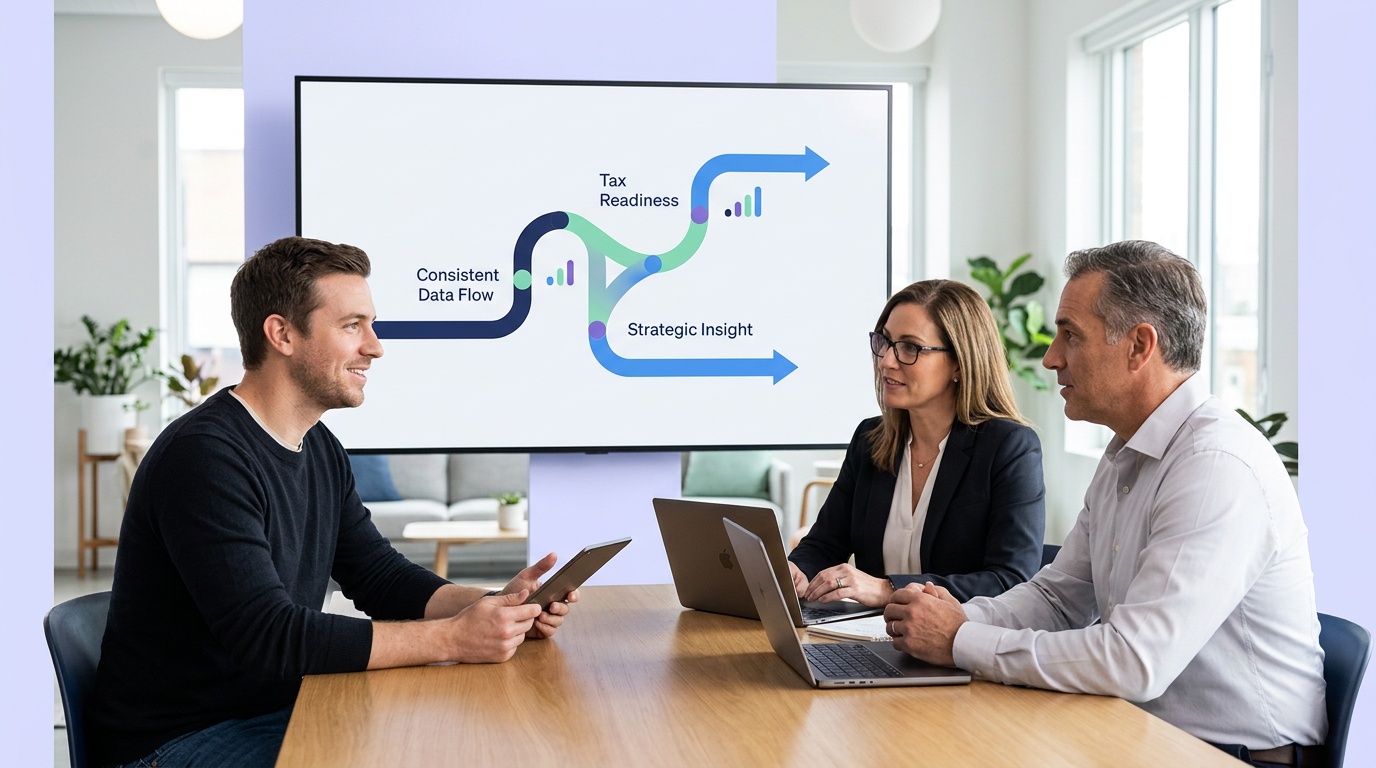
Beyond Basic Bookkeeping: The Role of a Financial Operations Partner
A bookkeeping partner does more than enter transactions. The work can include maintaining the general ledger, reconciling accounts, organizing accounts payable and receivable, and preparing monthly financial reports. These routines give a founder a clearer view of cash movement and operating performance while creating a consistent accounting record for the tax CPA.
When the same financial data supports management reporting and tax preparation, the team can address discrepancies earlier. The bookkeeper can flag missing support or unusual balances; the founder can explain business context; and the CPA can advise on tax treatment within the scope of tax preparation.
Defining Roles: Day-to-Day Accounting vs. Strategic Tax Filing
The bookkeeper records and organizes business activity according to the agreed accounting process. The founder supplies context, approves business decisions, and provides documents the finance team cannot obtain independently. The CPA reviews the accounting information, identifies tax-specific adjustments, and prepares the tax filing. These responsibilities are connected, but not interchangeable.
Set the boundaries in writing. Clarify who reconciles accounts, follows up on missing receipts, reviews year-end balances, and answers tax questions. Agree on how proposed adjustments will be documented, so a tax entry does not change management reports without explanation.
Seamless Workflow: How Direct Collaboration Saves Time and Money
Direct contact can reduce repeated requests and prevent small questions from sitting in the founder’s inbox. A practical workflow starts with monthly bookkeeping, continues with regular review of open items, and gives the CPA organized records when tax work begins. Shared access to the accounting system and a secure document process can help both professionals work from current information.
Coordination is especially useful when the bookkeeper can explain ledger entries and the CPA can send technical tax questions to the right person. The arrangement may reduce avoidable cleanup and rework, though preparation time and fees depend on the records and engagement.
Quantifying the Cost of the Intermediary: Lost Hours, Increased Fees
When the founder has to locate an invoice, interpret a bookkeeping note, and relay the answer to the CPA, each handoff can create friction. Across unresolved transactions and accounts, time shifts from tax analysis to information gathering. The cost can include a larger cleanup task, a delayed close, or less timely financial reporting for the leadership team.
There is no universal dollar amount for this friction. Ask the tax preparer to identify which work falls within return preparation and which is cleanup, then discuss how ongoing reconciliations and direct questions could change the workload. Cypher’s Bookkeeping service is designed for ongoing accounting support, while the company’s tax professional remains responsible for tax advice and filing.
A Practical Three-Way Workflow
- Agree on ownership: Document who maintains accounts, supplies records, reviews reports, and prepares filings.
- Keep the books current: Reconcile accounts regularly and record open questions with supporting details.
- Coordinate before filing: Give the CPA access to organized reports and route accounting questions directly to the bookkeeper.
- Record tax adjustments: Document CPA-provided adjustments and clarify how they affect tax records and management reporting.
Security, Accountability, and Quality: Differentiating Trusted Partners from Offshore Pools
When evaluating an outsourced bookkeeping arrangement, look beyond labor costs. You need clear ownership of the work, controlled access to financial data, and a reliable way to resolve questions. A distributed service model is not automatically risky, and a local provider is not automatically secure. The distinction is whether named people, documented procedures, and appropriate safeguards are in place. Ask who reviews the books, who responds to your CPA, and who is accountable when records need correction.
The Accountability Gap: Single Point of Contact vs. Diffuse Labor
A named point of contact gives your company a person who understands its accounts, open questions, and close process. That continuity matters when the CPA asks why a balance changed or requests support for a transaction. In a labor-pool model, work may move between people without a clear owner, leaving you to repeat context or chase updates. Ask how work is assigned, who checks it, how staff changes are communicated, and where unresolved items are tracked.
Data Security and Privacy: Protecting Your Business Information
Bookkeeping can involve bank activity, payroll details, customer records, vendor invoices, and tax documents. Ask how the provider grants and removes user access, transfers files, stores documents, and handles a suspected security incident. Encrypted document portals and role-based access are safeguards to discuss, not assumptions to make. Confirm whether subcontractors can view your information, where data may be accessed from, and how confidentiality obligations apply to everyone involved. Avoid sending sensitive records through informal channels when a controlled portal is available.
Onshore Expertise vs. Offshore Arbitrage: Understanding the Risks
Location alone does not establish accounting quality. The practical concern is whether the people maintaining your ledger understand the agreed accounting basis, document their work, and know when a question belongs with your CPA. A low-cost arrangement can become expensive if unclear instructions lead to rework or nobody owns follow-up. A remote team can work well when communication, review, access, and escalation procedures are explicit. Judge the operating model, not a map.
Evaluating Firm Credentials: What to Look for in a Tax-Coordinated Partner
Ask for a clear description of the bookkeeping team’s responsibilities and how it coordinates with your tax professional. Bookkeeping maintains accounting records; tax professionals determine tax treatment and prepare filings. Neither role should be presented as an audit unless the provider is qualified and engaged for that work. Cypher publicly offers outsourced bookkeeping and accounting for growing businesses. Cypher's current plans include accrual-basis bookkeeping and monthly financial statements. Its Bookkeeping service can support ongoing records, with scope confirmed against current plan details.
Request sample reporting, a description of review procedures, and the process for responding to CPA questions. Ask whether the firm can explain balance sheet accounts and maintain a documented trail for adjustments. Cypher’s Bookkeeping is worth reviewing when you want ongoing accounting support, but confirm that any provider’s scope matches your business needs and your tax professional’s expectations.
| Evaluation area | Questions to ask | What a clear answer includes |
|---|---|---|
| Accountability | Who owns my account and reviews the work? | A named contact, defined review responsibility, and a documented path for unresolved items. |
| Data handling | How are access, file sharing, and confidentiality managed? | Specific access controls, secure transfer methods, and clear terms for staff or subcontractor access. |
| CPA coordination | Who answers questions about ledger entries? | A direct contact who can explain bookkeeping records and route tax judgments to the CPA. |
Your Year-End Tax Handoff Checklist: What Every CPA Needs
A year-end handoff is more useful when it contains reconciled accounts, support for significant balances, and clear answers to open accounting questions. Use this checklist to spot missing items before tax preparation begins. Your CPA may request additional records based on your entity, accounting method, and filing requirements, so confirm the final list with that professional.
Essential Reconciliations: Bank, Credit Card, and Balance Sheet
Confirm that each bank and credit card account is reconciled through fiscal year-end, with differences investigated rather than carried forward without explanation. Review balance sheet accounts such as loans, accounts receivable, accounts payable, and payment processor balances. Keep statements, reconciliation reports, and relevant schedules together so a reviewer can trace reported balances to source records. Identify unresolved items with their amount, context, and next step.
Fixed Asset Schedules and Depreciation Records
Provide a schedule of business assets purchased, sold, or disposed of during the year. Include purchase dates, cost, descriptions, and available invoices or sale documentation. The tax professional determines the appropriate tax treatment and depreciation; the bookkeeping record should make the underlying activity easy to review. Flag missing documents or uncertain classifications rather than guessing at a tax conclusion.
Accrual Adjustments and Revenue Recognition Documentation
For accrual-basis records, document relevant items such as unpaid expenses, customer prepayments, and revenue recorded before or after cash receipt. Provide contracts, invoices, delivery or service details, and schedules that explain the timing recorded in the books. Revenue recognition depends on the company’s circumstances and accounting policies, so ask the CPA to review tax-specific questions. Keep a record of adjustments, their rationale, and supporting material.
Key Documents for Tax Filings: Profit & Loss, Balance Sheet, Trial Balance
Prepare the year-end profit and loss statement, balance sheet, and trial balance for the agreed reporting period. Include general ledger detail when requested, along with schedules that explain material balances and unusual entries. These reports should agree and reflect the completed close. A concise list of open questions helps the CPA focus review time on decisions requiring professional judgment.
Proactive Tax Planning Touchpoints Throughout the Year
Tax coordination does not need to wait until the filing deadline. Set periodic check-ins with the tax professional when the business expects a significant change, such as a new revenue stream, major asset purchase, financing event, or change in entity structure. Share current financial statements and relevant documents ahead of those conversations. The CPA can advise on tax implications within the engagement, while the bookkeeping team maintains accounting records and documents agreed adjustments.
Making the Right Choice: Partnering for Financial Clarity and Growth

Choose a bookkeeping partner based on how it will run the work, not on the promise of a smooth tax season. Look for defined responsibilities, consistent monthly reporting, an accessible point of contact, and a process for responding to your tax professional. A sound accounting routine supports tax preparation and gives founders timely information for cash planning, budgeting, and operating decisions.
When to Consider Outsourced Bookkeeping
Consider outside support when reconciliations fall behind, financial reports arrive too late to guide decisions, or bookkeeping depends on a founder’s spare hours. It may also help when transaction volume or reporting needs have outgrown an informal spreadsheet process. Before engaging a provider, identify the work that needs an owner, the reports leadership needs, and the records your CPA expects.
Key Questions to Ask Potential Firms
Ask who will manage your account, review the monthly close, and communicate with your CPA. Clarify the accounting basis, reporting deliverables, document-sharing method, access controls, and process for correcting or explaining entries. Confirm where bookkeeping responsibilities end and tax advice, tax filing, and audit work begin. Request written scope and current pricing details, then check that the proposed workflow fits your business systems.
Cypher's Approach: Dedicated Teams, Tax-Savvy Processes
Cypher publicly offers outsourced bookkeeping and accounting for growing businesses. Cypher's current plans include accrual-basis bookkeeping and monthly financial statements. Bookkeeping can support recurring accounting work, with current scope and pricing confirmed on the official pricing page. Ask how the service will coordinate with your tax professional and what records will be available for year-end review. Cypher's Bookkeeping is an option to assess against those needs, not a substitute for tax advice or filing.
The Confidence to Build Your Empire
A practical partner makes responsibilities visible and gives you a dependable view of the numbers behind the business. Before deciding, align the monthly close, reporting cadence, CPA communication, and security procedures with your operating needs. The strongest fit keeps records current, answers for its work, and collaborates with your tax professional while preserving clear boundaries.
Frequently Asked Questions
How much does outsourced bookkeeping typically cost?
Outsourced bookkeeping costs vary with transaction volume, accounting needs, service scope, and business complexity. Before comparing providers, ask what monthly close, reconciliations, financial statements, and tax-season coordination include, and whether extra services carry separate fees. Request current pricing directly, since published plans and service limits can change.
Do bookkeepers work with tax preparers?
Bookkeepers can work directly with tax preparers to answer questions about recorded transactions and share supporting documents. The bookkeeper maintains and organizes the accounting records, while the tax professional handles tax judgments and filings. Agreeing on roles and year-end processes early can reduce founder follow-up and help keep tax preparation focused.
Is AI replacing bookkeepers?
AI is not a full replacement for bookkeepers, because accounting still requires context, review, and follow-up on unusual activity. Automation can assist with repetitive tasks, while a bookkeeping professional checks records, resolves open questions, and coordinates with the tax preparer. Founders should assess the provider’s process and oversight, not just its software.
What are red flags when hiring a CPA?
Red flags when hiring a CPA include unclear responsibilities, slow or inconsistent communication, and no clear process for requesting documents or resolving questions. Ask who will prepare your return, what records they expect, and how they coordinate with your bookkeeper. Clear boundaries help prevent year-end surprises and keep accounting and tax work connected.
How can I tell if a CPA is good for my business?
A good CPA for your business explains tax requirements clearly, sets expectations for records and timelines, and answers questions in a way you can act on. Ask about experience with businesses like yours and how the CPA works with an outsourced bookkeeper. Direct coordination can help the team resolve accounting questions with less founder back-and-forth.
